The short answer
- A thin scatter of leaves is fine — it's the thick blanket left sitting all fall that does the damage.
- Clear leaves in stages through October and November, then do one final cleanup after the last drop before snow.
- Light leaf cover can be mulched back into the lawn with the mower, but heavy cover needs to come off entirely.
When the maples and oaks let go around Jefferson City, a few leaves drifting across the yard are no problem at all — in fact, a light scatter can even help feed the soil. The trouble starts when those leaves pile up into a thick, wet blanket and sit there week after week. Mid-Missouri falls tend to be damp, and a soggy layer of matted leaves on a cool-season lawn is one of the easiest ways to walk into spring with bare, patchy turf. Here's how we think about fall cleanup for properties around Jefferson City, Wardsville and Holts Summit.
Why leaves left sitting hurt your lawn
Grass is still alive in the fall — it's storing energy and growing roots before it goes dormant. A heavy layer of leaves works against all of that. It blocks sunlight and air, so the grass underneath can't photosynthesize or breathe. It traps moisture against the blades, and in our wet falls that mat stays damp for weeks.
That trapped moisture and shade is exactly what lawn diseases love. Matted leaves are a common setup for mold and snow mold, and you'll often find the proof in spring: pale, slimy, or bare spots in the shape of whatever leaf piles sat there the longest. On top of the disease pressure, a thick layer simply smothers the grass and gives insects and small pests a cozy place to settle in for the winter. None of it is dramatic in October — it's the slow damage you don't see until April.
Timing for Mid-Missouri: clear in stages
The most common mistake is waiting for every last leaf to fall before doing anything. By the time the trees are bare, the earliest leaves have been sitting and matting for over a month. Instead, clear in stages as they pile up through October and into November. A pass every week or two keeps the lawn from ever spending long under a heavy cover.
Then plan on a final cleanup after the last drop — around here that's typically mid-to-late November, once the oaks have finished and before any real snow sets in. Going into winter with a clean lawn means the grass spends the dormant months breathing instead of suffocating, and you're not racing the weather to rake frozen, wet leaves in December.
The mulching option — when it works
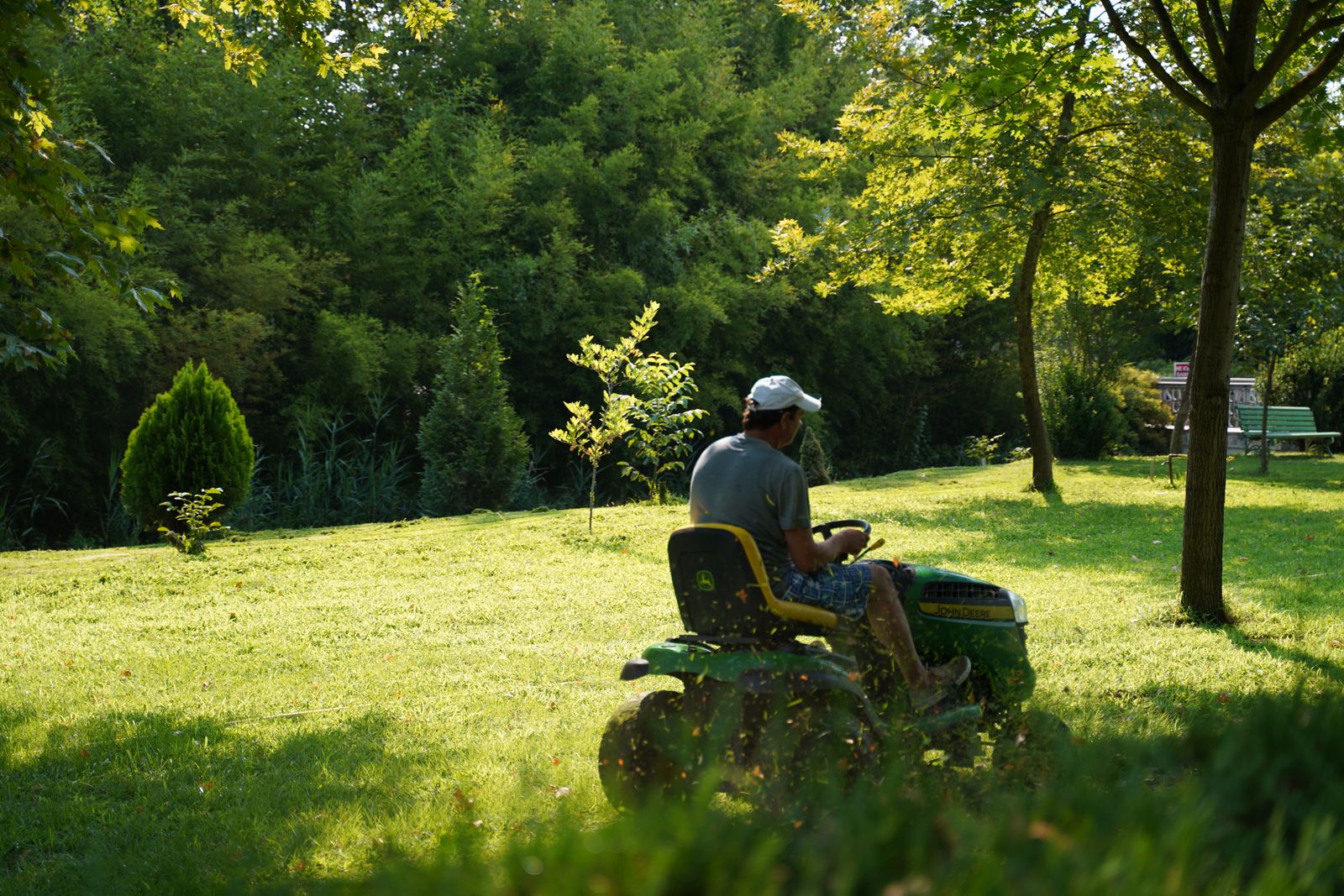
You don't always have to haul leaves away. When the coverage is light and the leaves are dry, mowing over them with a mulching blade chops them into small pieces that settle down into the lawn and break down over winter, feeding the soil as they go. It's a genuinely good practice — free organic matter and one less chore.
The catch is that mulching only works for light coverage. If you can still see plenty of grass through the leaves, mow and mulch away. But if the leaves are thick enough to hide the lawn, or they're wet and clumping, chopping them just creates a finer mat that smothers the grass all the same. Heavy coverage needs to be removed, not just shredded in place.
Don't forget the beds, edges and foundation
Leaf cleanup isn't only about the open lawn. Leaves collect in landscape beds, where a thick wet layer can hold too much moisture against plant crowns and shelter pests. They drift up around the foundation of the house, where you don't want damp debris packed against the siding. And they blow into the corners of the lawn and along walkways and driveway edges, where they look messy and get tracked inside.
While you're at it, give the gutters a glance — clogged gutters in a wet Mid-Missouri fall are their own headache. A complete fall cleanup clears the lawn, the beds, the edges and the foundation line so the whole property is buttoned up for winter.
Hauling away vs. handling on-site
What happens to the leaves depends on the property. Light, dry coverage can be mulched in place as we covered above. Heavier loads usually get bagged or hauled off so they're not left to rot on the turf. There's no single right answer — it comes down to how much leaf volume you're dealing with and what makes sense for your yard.
A quick fall cleanup checklist
- Don't wait for the last leaf. Clear in stages through October and November so nothing sits and mats.
- Mulch the light stuff. Mow over a thin, dry scatter to feed it back into the lawn.
- Remove the heavy stuff. If you can't see grass through the leaves, take them off the lawn.
- Clear beds, edges and the foundation. Leaves collect everywhere, not just the open lawn.
- Do a final cleanup before snow. Go into winter with a clean property, usually by late November here.
If raking and hauling isn't how you want to spend your fall weekends, that's exactly what we handle — seasonal leaf removal and full fall cleanups for Jefferson City properties, timed so your lawn never sits under a heavy blanket.
The bottom line for Mid-Missouri
A clean fall sets up a healthier spring. Keep leaves from matting on the lawn through October and November, mulch what's light, remove what's heavy, and finish with a thorough cleanup before snow — and you'll be in much better shape when it's time for getting the lawn going again in spring. Want it handled for you? See our leaf removal services or request a free estimate and we'll get your fall cleanup on the schedule.